Steering Wheel Restoration: Best Choices (2026)
Your steering wheel is the one interior surface you touch every single time you drive. When it?s worn, sticky, cracked, faded, or shiny-slick, you feel it immediately?sometimes literally, when rough leather or peeling coating catches your fingertips. Beyond comfort, the steering wheel affects confidence and control. A slippery rim in hot weather or a split seam on a long trip isn?t just annoying; it can be distracting.
Steering wheel restoration also has a big impact on the look and value of your cabin. A fresh wheel can make an older interior feel cared-for, while a damaged wheel can make an otherwise clean car feel neglected. The good news: you usually have options?anything from a simple deep clean and re-dye to a full re-wrap or replacement wheel?depending on your budget, vehicle type, and how perfect you want it.
This guide breaks down how to choose the right steering wheel restoration approach, how to evaluate your wheel?s material and condition, what each method costs, and what mistakes to avoid so your repair doesn?t fail a month later.
Start With the Basics: Identify Your Steering Wheel Type
Restoration success depends heavily on what the wheel is made of. Different materials require different products, prep, and expectations.
Common steering wheel materials
- Leather-wrapped (smooth or perforated): Most common in modern cars and many classics. Can be cleaned, re-dyed, repaired, or re-wrapped.
- Leatherette / vinyl / polyurethane: Often found in base trims. Some can be refinished; others don?t hold dye well long-term.
- Alcantara / suede: Performance cars and some premium trims. Usually needs deep cleaning and re-fibering; dyeing is tricky and often not recommended.
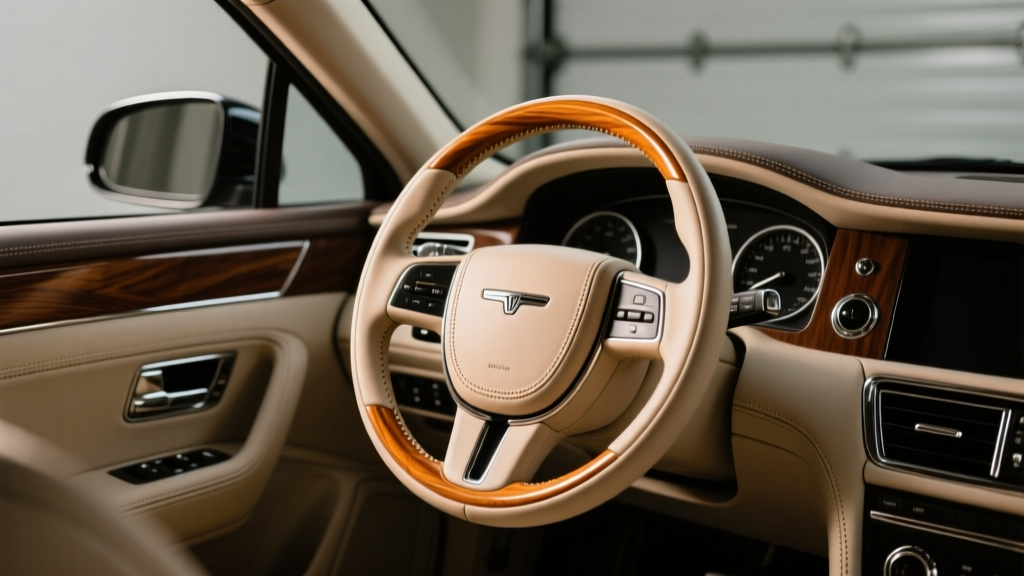
- Wood + leather combo: Requires separate restoration paths for wood clear coat vs. leather sections.
- Hard plastic / older urethane (especially classics): May crack; often needs epoxy repair and repaint, or replacement.
- Carbon fiber (aftermarket or OEM): Usually a clear coat issue; refinishing may be required.
How to confirm the material (quick checks)
- Look for seams: Stitching usually means leather/Alcantara wrap. No seams often points to molded urethane or plastic.
- Check the grain: Leather has natural variation; vinyl grain often repeats in a uniform pattern.
- Smell and feel: Genuine leather has a softer ?warm? feel; vinyl can feel colder and more uniform.
- Owner forums / VIN build sheet: Helpful for performance trims and special editions.
Assess the Damage: What?s Actually Wrong?
Before you buy a kit or book a re-wrap, take five minutes to evaluate the wheel in good lighting. Different problems point to different fixes.
Typical steering wheel issues and what they mean
- Shiny, slick surface: Usually body oils, product buildup, or worn topcoat. Often fixable with deep cleaning and re-matting.
- Sticky or tacky feel: Degraded coating (common on soft-touch finishes), silicone-based dressings, or heat damage. May require stripping and refinishing or replacement.
- Color fading: UV exposure and abrasion. Often fixable with re-dyeing/recoloring.
- Minor scuffs and shallow scratches: Often fixable with prep + colorant + clear coat.
- Cracks and splits in leather: Some can be filled, but heavy cracking usually needs re-wrap for a durable result.
- Loose or frayed stitching: Re-stitching or full re-wrap is typically best.
- Chunks missing (urethane/plastic): Requires structural repair (epoxy) or replacement.
Real-world examples
- Daily driver SUV with glossy wheel at 80,000 miles: Often restored with a thorough degrease + leather prep + matte topcoat, no re-wrap needed.
- Used performance sedan with worn thumb grips: The foam under the leather can compress; a re-wrap with new padding restores the original ?full? feel.
- Older truck with a cracked molded wheel: Epoxy repair works if cracks are mild; severe cracking usually means replacement for safety and longevity.
Choose the Right Restoration Path (Based on Condition, Budget, and Expectations)
Option 1: Deep cleaning and decontamination (best for shiny or slippery wheels)
If the wheel isn?t physically damaged and the ?problem? is shine, grime, or tackiness from product buildup, cleaning may be all you need.
- Best for: Oily shine, mild discoloration, light grime, reduced grip
- Cost: Low
- DIY difficulty: Easy
Option 2: Re-dye / recolor + new protective topcoat (best for fading, minor wear)
Recoloring can make a worn leather wheel look factory-fresh when the leather structure is still intact.
- Best for: Faded color, light scuffs, worn topcoat
- Cost: Low to medium
- DIY difficulty: Moderate (prep is everything)
Option 3: Leather repair (filler) + recolor (best for shallow scratches and small cracks)
Flexible leather fillers can smooth small imperfections, but they?re not magic. If the leather is heavily cracked like dried mud, filler will be a temporary cosmetic patch at best.
- Best for: Small nicks, shallow cracks, localized wear spots
- Cost: Medium
- DIY difficulty: Moderate to advanced
Option 4: Professional re-wrap / re-trim (best for heavy wear, splits, or a custom upgrade)
A quality re-wrap replaces the outer material (leather/Alcantara) and can add new padding, thicker grips, different stitch color, or a 12 o?clock stripe.
- Best for: Deep wear, torn leather, seam failure, customization
- Cost: Medium to high
- DIY difficulty: Usually pro-level (some stitch-on covers exist, but results vary)
Option 5: Replacement steering wheel (best for structural damage or when time matters)
If the wheel is bent, has severe cracks in the core, or the material is failing in a way that won?t hold a refinish, replacement is often the most reliable choice.
- Best for: Structural damage, severe cracking, time-sensitive repairs
- Cost: Medium to very high (OEM)
- DIY difficulty: Moderate to advanced (airbag safety procedures required)
Step-by-Step: How to Evaluate and Pick the Best Method
- Inspect in bright light: Look for cracks, splits, missing chunks, loose stitching, and glossy hotspots at 10-and-2 grip areas.
- Decide if it?s cosmetic or structural:
- If it?s mainly shine, grime, and fading: cleaning/recoloring is usually enough.
- If the leather is torn, heavily cracked, or the seam is failing: plan for a re-wrap.
- If the core is damaged or the wheel is deformed: replacement is safest.
- Match the finish to your interior: Most OEM leather wheels have a satin to matte finish, not glossy. If you like a factory look, avoid high-gloss coatings.
- Consider your climate and usage:
- Hot climates + sweaty hands: prioritize durable topcoats and easy-clean finishes.
- Cold climates: thicker padding and quality leather can improve comfort.
- Track use: Alcantara feels great but needs more upkeep; leather is easier to clean.
- Set a realistic budget: If you?re flipping the car, a well-done recolor may be the sweet spot. If you?re keeping it long-term, a pro re-wrap can be the ?do it once? solution.
- Choose DIY vs. pro: If you hate the idea of sanding/prep work or need perfect stitching, go pro. If the wheel is mostly intact and you?re patient, DIY can look excellent.
DIY Restoration: A Practical Process (Cleaning + Recoloring Leather)
This workflow covers the most common scenario: a leather-wrapped wheel that?s shiny, slightly worn, and needs a refresh. Adjust products based on your wheel material.
What you?ll need
- Interior leather cleaner (or dedicated steering wheel cleaner)
- Soft interior brush + microfiber towels
- Leather prep/degreaser (for stripping oils and old dressing)
- Fine abrasive pad (gray) or very fine sandpaper (use lightly)
- Leather colorant matched to your interior (black is easiest; rare colors need matching)
- Matte or satin leather topcoat/protectant
- Masking tape and plastic to protect trim
- Nitrile gloves
Step-by-step instructions
- Protect surrounding areas: Mask the airbag badge, trim, and stalks. Place a towel over the gauge cluster.
- Deep clean: Spray cleaner onto a towel or brush (not directly into seams). Work in sections. Wipe until your towel stops turning gray/black.
- Strip oils and old coatings: Use leather prep/degreaser. This is where many restorations fail?colorant won?t bond to oily leather.
- Lightly level the surface: Gently scuff glossy areas. You?re not trying to remove leather?just knock down shine and improve adhesion.
- Repair small defects (optional): Apply flexible leather filler to small nicks. Let it cure, then level it lightly.
- Apply colorant in thin layers: Multiple light coats beat one heavy coat. Let each coat dry. Thin application reduces streaks and peeling risk.
- Seal with a topcoat: Choose matte/satin for an OEM-like finish. This is your wear layer and makes cleaning easier later.
- Cure time: Avoid aggressive cleaning and harsh heat for a few days. If possible, park indoors while it cures.
Pro tip for a factory feel
- After curing, lightly buff with a clean microfiber to even out the sheen and remove any ?tacky? feel.
- Avoid silicone dressings. They can create unwanted shine and reduce grip.
Product Recommendations and Comparisons (What to Look For)
Rather than focusing on a single ?best? brand, focus on choosing products designed for your wheel?s material and your end goal. Here?s how to compare options.
Cleaning products
- Best for routine care: pH-balanced leather cleaner with a matte finish (no conditioners that leave gloss).
- Best for heavy grime: Stronger dedicated leather degreaser/prep (used occasionally, not weekly).
Colorants and coatings
- Water-based leather colorant: Easier to work with, lower odor, good for DIY. Look for flexibility and abrasion resistance.
- Topcoat options:
- Matte: Most OEM-like, highest grip feel.
- Satin: Slight sheen, still tasteful and durable.
- Gloss: Usually not recommended for steering wheels; shows fingerprints and can feel slippery.
Re-wrap options (DIY cover vs. professional trimming)
- Stitch-on steering wheel covers: Budget-friendly and can look decent if installed carefully. Expect more time and slightly bulkier feel.
- Professional re-wrap: Best fit, best stitching, option to re-pad the wheel, and typically longest-lasting.
When to choose Alcantara
- Choose Alcantara if you love the tactile grip and don?t mind regular maintenance.
- Avoid it if you frequently drive with lotion/sunscreen on your hands or want a ?wipe clean? wheel.
Common Mistakes to Avoid (And How to Get a Long-Lasting Result)
- Skipping degreasing: Body oils are the #1 reason dyes and topcoats peel. Clean until the towel stays clean.
- Applying thick coats: Heavy colorant layers crack and wear faster. Thin layers bond better and feel more natural.
- Choosing the wrong sheen: A glossy wheel looks ?coated? and often feels slippery. Matte/satin usually matches OEM interiors.
- Using oily conditioners on steering wheels: Many leather conditioners are great for seats, but they can make a wheel shiny and reduce grip.
- Ignoring stitching damage: If threads are frayed or loose, recoloring won?t stop the seam from failing. Re-stitch or re-wrap.
- Rushing cure time: Even if it feels dry, coatings may not be fully cured. Give it time before heavy use and aggressive cleaning.
- Over-sanding: Aggressive sanding can thin leather, damage grain, and make the wheel look unnatural.
When It?s Better to Go Professional
DIY is satisfying and can look excellent, but some situations justify professional restoration or replacement.
- Heavily cracked leather across large areas (especially at the thumb grips)
- Seam failure or loose wrap where the leather has shifted
- Custom shaping requests (thicker grips, flat-bottom conversions, re-padding)
- Exotic colors and perfect matching for rare interiors
- Airbag removal concerns if the wheel must be removed for trimming
What to ask a re-wrap shop
- What leather type do you use (OEM-grade, nappa, perforated options)?
- Can you match stitch color and pattern to factory style?
- Do you re-pad/restore foam if it?s compressed?
- What?s the turnaround time and warranty on workmanship?
- Do you keep the OEM airbag and controls untouched?
FAQ: Steering Wheel Restoration
How long does a steering wheel recolor last?
With proper prep (degrease, light scuffing) and a quality topcoat, a DIY recolor can last years on a daily driver. Frequent hand lotion/sunscreen, harsh cleaners, and heavy abrasion will shorten lifespan.
Can I restore a sticky steering wheel?
Sometimes. If stickiness is from product buildup, deep cleaning and degreasing can fix it. If it?s a deteriorating soft-touch coating, you may need to strip and refinish, or replace/re-wrap for a permanent solution.
Is a steering wheel cover a good alternative?
A stitched cover can be a practical option if your wheel is worn but structurally fine. Just know it can change the thickness and feel, and cheaper slip-on covers can rotate or feel bulky.
What?s the best finish for grip?matte or satin?
Matte usually provides the best ?dry? grip and looks most OEM. Satin can be a good compromise if you want a slightly richer look while still avoiding slipperiness.
Can Alcantara steering wheels be restored?
Often yes?through deep cleaning and lifting the fibers with the right tools. Dyeing Alcantara is risky and can look blotchy; if it?s badly worn or matted, re-wrapping may be the better choice.
Do I need to remove the steering wheel to restore it?
For cleaning and recoloring, usually no?mask carefully and work slowly. For a professional re-wrap or structural repair, removal is common. If airbags are involved and you?re not experienced, consider professional help.
Next Steps: Pick Your Plan and Get Your Hands Back on a Great Wheel
Start by identifying your steering wheel material and the type of damage you?re dealing with. If it?s mainly shine and grime, a deep clean may surprise you. If the color is worn but the leather is intact, a recolor with a matte/satin topcoat is a cost-effective refresh. If there are splits, failing seams, or compressed grips, a professional re-wrap is usually the most satisfying long-term fix.
- This week: Clean and inspect the wheel under bright light; decide whether it?s cosmetic or structural.
- Next: Choose DIY recolor vs. pro re-wrap based on durability expectations and how perfect you want it.
- Ongoing: Maintain with gentle cleaners and skip glossy dressings to keep that factory grip.
For more interior detailing and restoration walkthroughs, explore the latest guides on carinteriormix.com.